Hair Intelligence — Shedding
Why does my hair fall out more at the same time every year?
Every September, like clockwork, her brush filled up with hair. She'd panic, change her shampoo, take supplements, book a dermatologist. Then by November it would stop — and the following autumn, it would start again. For six years she thought something was wrong with her. It wasn't.
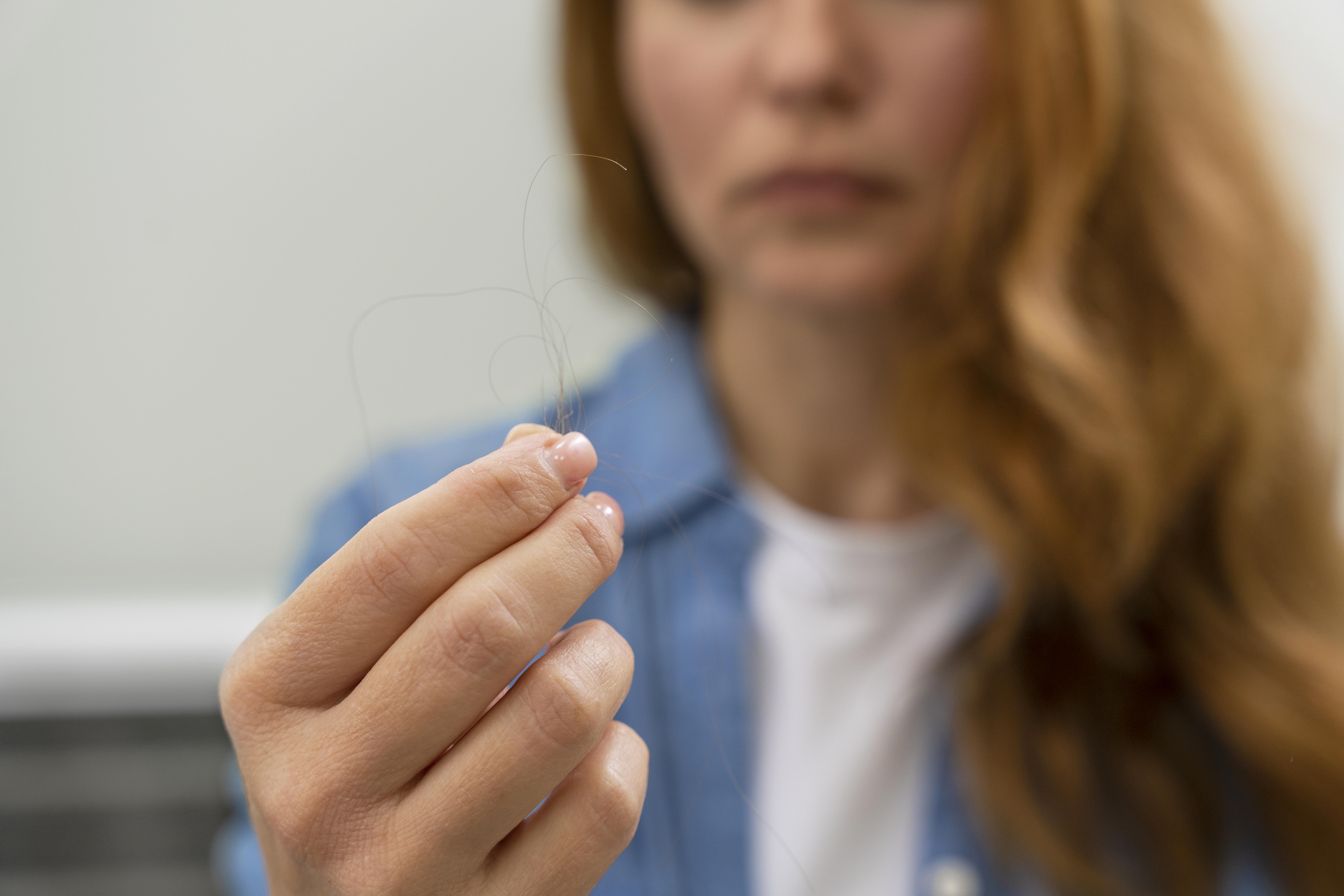
Elena first noticed the pattern when she was twenty-eight. Every year, somewhere between late August and early October, the shedding would start. Not dramatic, not in clumps — just consistently more than usual. More on her pillow. More in the shower drain. More caught in her brush after a blowout. She'd find herself counting strands, Googling causes, convincing herself it was stress, or her diet, or something systemic she hadn't diagnosed yet.
What nobody ever told Elena — not her GP, not the two dermatologists she saw, not the trichologist she eventually paid to see privately — was that what she was experiencing has a name. It's called seasonal telogen effluvium, and it's one of the most common hair phenomena in the northern hemisphere. It's also almost entirely misunderstood.
"The shedding wasn't a symptom of something going wrong. It was evidence that her hair cycle was working exactly as it should — responding to seasonal signals her body had been reading since long before she was born."
The science behind seasonal shedding
Your hair doesn't all grow at the same pace at the same time. Each strand operates on its own independent cycle — a growth phase called anagen, a transition phase called catagen, and a resting phase called telogen, during which the hair sits dormant before eventually shedding to make way for a new strand. On any given day, roughly 85–90% of your hair is in the growth phase. The other 10–15% is resting, and a small percentage is actively shedding. That's normal. That's around 50–100 hairs per day for most people.
What makes autumn different is light. Specifically, the reduction of daylight hours as summer ends. Humans are mammals, and like many mammals, we have ancient biological systems that respond to photoperiodicity — the changing ratio of daylight to darkness across the year. In other species, this triggers seasonal coat changes. In humans, the effect is subtler, but it's real: a study published in the British Journal of Dermatology analysed hair loss data from over 800 women over six years and found a clear, statistically significant peak in telogen-phase hairs in summer — meaning those hairs would shed in autumn, roughly 90 to 100 days later, when the telogen phase ends.
In other words: the hair you're losing in October was already decided in July. The follicle went into resting phase during the height of summer, possibly as a biological echo of ancient fur-shedding patterns. By the time you're pulling hairs off your jumper in autumn, the process started months ago, and there was nothing you could have done to prevent it.
How to tell seasonal shedding from actual hair loss
This is the question that matters, because the two can look similar from the outside but have entirely different causes, trajectories, and treatments. Seasonal shedding is temporary, diffuse, and self-correcting. True hair loss — from conditions like androgenetic alopecia, thyroid dysfunction, iron deficiency, or autoimmune disorders — is progressive, often patterned, and won't resolve on its own.
A few things to look for. Seasonal shedding typically starts and stops within a window of four to eight weeks. It affects the entire scalp evenly — you won't notice it more at the temples or crown. The shed hairs will usually have a small white bulb at the root, indicating they completed a full telogen phase. And critically: your scalp will look normal. No redness, no visible thinning, no expanding parting.
If the shedding lasts longer than three months, if you can see scalp that wasn't visible before, if it's concentrated in a specific area, or if it's accompanied by other symptoms — fatigue, changes in nails, irregular periods — those are signals worth investigating with a doctor. Seasonal shedding is common and benign. Dismissing real hair loss as seasonal is a mistake people make because this information isn't widely known.
What actually helps during shedding season
The honest answer is: not much needs to "help," because the process is self-limiting. But there are things you can do to support your scalp during this period and ensure the new hairs coming in behind the shed ones have the best environment possible to grow.
Scalp circulation matters more during telogen effluvium than at any other time. When hairs are in the resting phase, the follicle isn't receiving the same nutrient supply it does during active growth. Regular scalp massage — even five minutes, three times a week, using your fingertips — stimulates blood flow to the dermis and keeps follicles primed for the new growth phase. A 2019 study in the journal Eplasty found that standardised scalp massage increased hair thickness significantly over a 24-week period.
Protein intake also deserves attention. Hair is made almost entirely of a protein called keratin, and during periods of high turnover — like seasonal shedding — adequate dietary protein ensures the incoming strands have the building blocks they need. This doesn't mean protein treatments on your hair. It means eating enough eggs, legumes, fish, and meat. The hair you grow in November was built from what you ate in October.
Finally, resist the urge to overhaul your entire routine. Elena's mistake — and it's an extremely common one — was interpreting the shedding as evidence that her current products weren't working and switching everything simultaneously. New shampoos, new supplements, new serums. When the shedding stopped naturally in November, she attributed it to whichever new product she'd most recently started. Then the following autumn, when the shedding returned despite the "solution," the anxiety started again. The products weren't doing anything. Her biology was.
What Elena knows now
She still notices the shedding every September. But she stopped panicking about it around age thirty-four. Now she treats autumn like a signal to be a little more gentle — a little less heat, a little more scalp massage, a little more attention to what she's eating. She doesn't switch her shampoo. She doesn't book emergency dermatologist appointments. She brushes her hair over the bath and counts roughly the same number of strands she's been counting for years, and she knows that by late October, it will slow down. And it always does.
Understanding your own hair cycle is one of the most useful things you can learn. Not because it solves every problem, but because it replaces anxiety with information. And information, as it turns out, is usually what you needed all along.