Hair Intelligence — Combination Hair
Why is my hair greasy at the roots but completely dry at the ends?
It sounds like a contradiction — too much of something and not enough of it at the same time. But combination hair is real, it's common, and the mistake most people make is treating both problems with the same product. That's exactly what makes it worse.
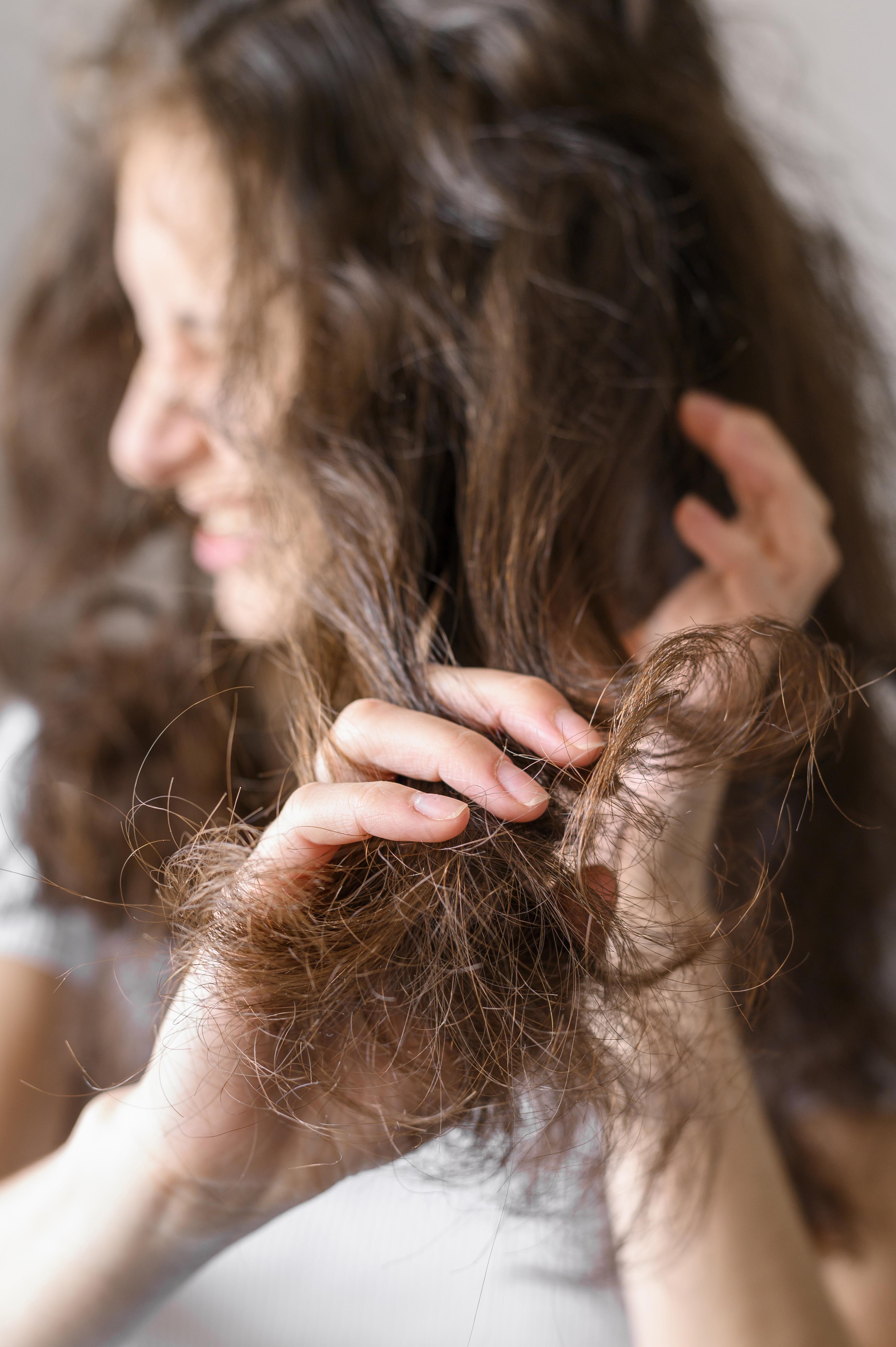
Sofia has what she calls "impossible hair." Oily scalp that needs washing every other day, but ends so dry they feel like straw by Thursday. For years she managed the oiliness by washing frequently with a clarifying shampoo, then wondered why her ends kept getting worse no matter how much conditioner she used. A trichologist eventually pointed out the problem with a single sentence: "You've been solving one problem and creating the other."
Combination hair — oily at the roots, dry at the ends — is not a hair type so much as a condition. It happens when two different things are true simultaneously: the scalp is producing sebum efficiently, and the hair shaft itself is damaged or porous enough that it can't retain moisture along its length. These are separate issues with separate solutions, and treating them as one is where most people go wrong.
Why the roots get oily
Sebum is produced by sebaceous glands attached to each follicle. The rate of production is partly genetic — some scalps simply produce more than others — and partly driven by behaviour. Frequent washing is the most common driver of excess sebum production. When you strip the scalp of its natural oils every day, the sebaceous glands respond by producing more oil to compensate. Over time, this creates a cycle: wash because oily, become more oily, wash again. The glands have been trained into overproduction.
Hormones also play a significant role. Androgens — particularly dihydrotestosterone — directly stimulate sebaceous gland activity. This is why oily scalps often become more pronounced during puberty, around ovulation, and in the days before menstruation. It's also why stress — which elevates cortisol, which influences androgen levels — can make a previously manageable oily scalp dramatically worse during difficult periods.
"Your ends are dry because they're old. Your roots are oily because they're alive. The solution to each is completely different — and what works for one will actively harm the other."
Why the ends get dry
Hair at your ends is the oldest part of your hair. If your hair is shoulder length, your ends are probably two to three years old. They've been through every wash, every heat styling session, every night of friction against a cotton pillowcase, every time you pulled a hair tie out too aggressively. The cuticle — the protective outer layer of the hair shaft — gets worn down with each of these events. As the cuticle degrades, the cortex beneath becomes more exposed and moisture escapes more easily. This is what high porosity hair actually means: a damaged cuticle that lets water in quickly but can't hold it.
The frequent washing that oily-scalp people resort to compounds this problem significantly. Strong sulphate shampoos are excellent at removing oil. They're also excellent at stripping what little moisture the ends were managing to hold onto. Every additional wash removes more of the lipid layer that was protecting the mid-lengths and ends. The more you wash to fix the roots, the more you damage the ends. The more the ends are damaged, the more moisture they lose. The drier they get, the more you reach for heavy conditioners — which you then apply too close to the scalp, adding to the oiliness there.
The routine that actually works
The core principle is zone-specific care. Your scalp is not your ends. They have different needs and should be treated differently in the same wash.
Start by reducing wash frequency gradually. This is uncomfortable for the first week or two — the scalp will produce more oil than usual as it adjusts — but most people find that within three to four weeks, their scalp settles into a slower production rhythm. Going from daily washing to every two days, then every three, recalibrates the sebaceous glands and reduces baseline oiliness over time.
When you do wash, apply shampoo only to the scalp. Massage it in, then let the water carry the lather down the length when you rinse — that's usually enough to clean the mid-lengths without the direct contact that strips the ends. Conditioner, conversely, should go from mid-length to ends only, never on the scalp. The scalp doesn't need conditioner. Applying it there adds to the oiliness and can clog follicles over time.
For the ends specifically, a weekly deep conditioning treatment or hair mask — applied while the hair is damp, left for fifteen to twenty minutes, then rinsed — does more for chronically dry ends than daily leave-in products. The reason is penetration time: conditioning agents need time to move into the cortex of a damaged hair shaft, and the rinse-out conditioner you apply for two minutes in the shower rarely has time to do much beyond superficial coating.
A lightweight hair oil — argan, jojoba, or squalane — applied to dry ends after styling seals the cuticle and slows moisture loss throughout the day. The key word is lightweight. Heavy oils on already-fine hair at the ends will make them look greasy, which is the one thing people with oily scalps most want to avoid.
What Sofia does now
She washes twice a week. She uses a gentle, sulphate-free shampoo at the scalp only. She conditions from mid-length to ends. She does a deep mask on her ends every Sunday. Her roots still get oily — that's partly her genetics, and there's a ceiling on how much washing frequency can change it. But the cycle of over-washing and compensatory oil production is broken. Her ends no longer feel like straw. The two halves of her hair, which seemed to be working against each other for years, are finally being cared for separately — because they are, in every meaningful sense, separate.