Hair Intelligence — Frizz
Poofy Hair After Shower?
Here's How to Get Smooth Hair
You step out of the shower looking like a cloud. Nothing you apply helps. It happens every single time. Here's exactly why — and the routine that fixes it starting with your next wash.

Poofy hair and frizzy hair look similar but they're not the same problem. Frizzy hair has flyaways and rough texture. Poofy hair just expands — voluminous in a way you didn't ask for, shapeless, big. If yours is more frizz than poof, read our guide on frizzy hair after shower instead. If it's poof — that cloud shape, no definition — keep reading.
The good news: poof responds faster to routine changes than frizz does. Because poof is almost always a technique problem, not a product problem. Change the technique, the hair changes within one or two washes.
"Poofy hair is not a texture problem. It's a cuticle problem. And the cuticle responds to temperature, technique, and moisture — not to which serum you buy."
Why Your Hair Goes Poofy After the Shower
When hair gets wet, the cuticle — the outer protective layer of each strand — swells and opens. This is normal. The problem happens during and after drying, when the cuticle is supposed to close back down but doesn't fully. An open cuticle absorbs moisture from the air unevenly, causing strands to expand in different directions. The result: poof.
The most common reasons the cuticle fails to close properly after washing are hot water, rough towel-drying, aggressive brushing while wet, and air-drying without any product to seal the cuticle temporarily. Any one of these is enough to turn smooth hair into a cloud. Most people are doing several of them at once.
The Fixes — Starting With Your Next Shower
1. End With Cold Water
This is the fastest, free fix for poofy hair that exists. Hot water opens the cuticle. Cold water closes it. A 20-30 second cold rinse at the end of your shower — just on your hair, not your whole body — will make a visible difference to your hair's smoothness from the very first time you try it.
How to Do It
Turn the temperature to the coolest you can tolerate for the last 30 seconds of your shower. Tilt your head back and let the cold water run over the full length of your hair. It doesn't have to be ice cold — just cold. Then step out immediately without any more hot water contact.

2. Ditch the Terry Cloth Towel
The friction from a regular towel against wet, swollen hair is enormous. Every swipe roughs up the cuticle you just closed with your cold rinse, and causes mechanical breakage along the shaft. This is a major and very underrated cause of poof that people have been doing wrong for years.
The Swap
Use a microfiber towel or an old T-shirt instead. Squeeze and scrunch — don't rub. The difference in how your hair feels before you even apply any product will be immediately noticeable. Microfiber towels cost less than most serums and work better than any of them.
3. Apply Leave-In to Soaking Wet Hair
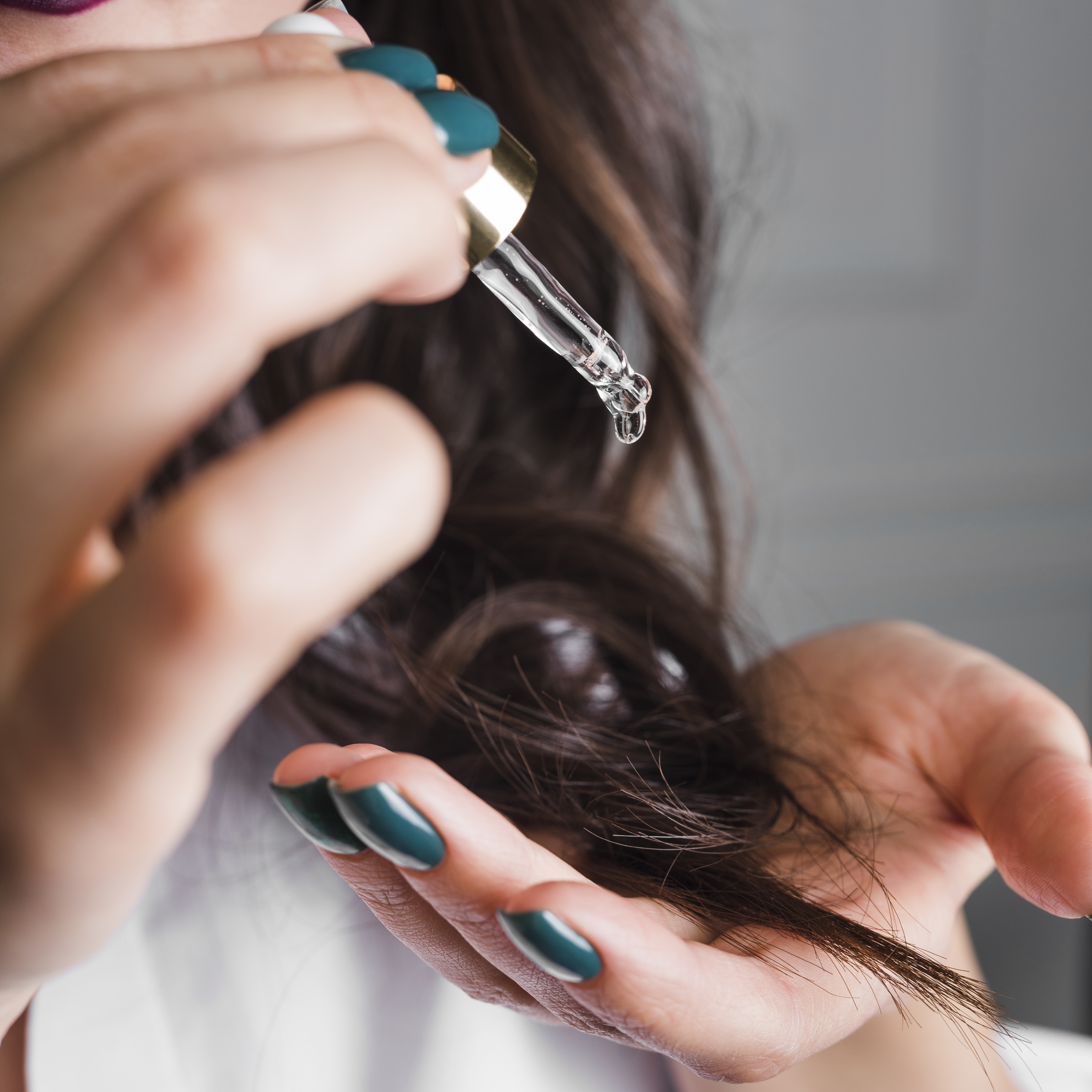
Most people apply serum or leave-in to damp or towel-dried hair. This is too late. By the time the towel has touched your hair, the cuticle is already partially roughed up and the moisture exchange with the air has begun. Apply your leave-in immediately after stepping out of the shower, while your hair is still dripping.
The Technique
Step out of the shower. While you're still standing in the bathroom with the door closed — before you even touch a towel — apply your leave-in conditioner from mid-lengths to ends. The water in your hair distributes it perfectly. Then gently scrunch with your microfiber towel. This seals the product in while the cuticle is still slightly open, which means it actually penetrates.
4. Don't Brush Wet Hair
Wet hair stretches before it breaks. Brushing it when it's fully wet causes both mechanical damage along the shaft and disrupts the cuticle pattern, which contributes directly to poof as it dries. The hair strands end up drying in random directions because the cuticle was disrupted before it had a chance to set.
What to Do Instead
Detangle with a wide-tooth comb in the shower while conditioner is in — the slip helps prevent damage. After you're out, use your fingers or a Denman brush to gently guide your hair into place while it's damp. Don't brush again until your hair is at least 70% dry.
The Anti-Poof Routine, Step by Step
Your New Wash Day Routine
Wash and condition as normal. Detangle with wide-tooth comb while conditioner is in.
Final 30 seconds: cold rinse over full length of hair. Tilt head back.
Step out. Before touching towel: apply leave-in conditioner to soaking wet mid-lengths and ends.
Gently scrunch upward with microfiber towel. No rubbing, no wringing.
Air-dry or diffuse on low-medium heat. Finish with cool shot once 80% dry.
Do not touch or brush until fully dry. Hands off.
"Most people who follow this routine report a visible difference from the very first wash. Not after a month of conditioning treatments — from the first time they try it."
Poofy hair is a solvable problem. It doesn't require expensive treatments or a cabinet full of products. It requires understanding what your hair's cuticle needs — which is cold, gentle handling, and something to seal it while it's still open. Give this routine one honest try and see what your hair actually looks like when it's treated the way it needs to be.

Free · 3 Minutes
Find out what your hair actually needs.
3 photos. 9 questions. A complete personalised diagnosis — including why your hair behaves the way it does after washing.
Begin Your Diagnosis →